
May 22nd, 2011 → 11:12 am @ daped
 Greetings friends!
Unless you’ve been living under a rock lately you’re probably aware that obesity rates in America have increased in the last 20 years. In 2009 the CDC reported that state obesity rates were largely between 20%-30%. Only Colorado and the District of Columbia were less than 20% (they were a slim 18.6% and 19.7%, respectively).
If you’re like me and need to count on your fingers, this means that 1-2 people out of 5 in the United States are obese. Unfortunately, the trends for kids and young adults are the same. (more…)
May 20th, 2011 → 10:34 am @ daped
A Conversation With ObesityBeater
Question: 23-year old obese female
” What I’m asking is, what do you do to keep yourself going, especially on the sluggish days when you don’t wanna move or can’t get outside due to the weather? I live in a very snowy/rainy region so this happens frequently. How do you make yourself go when you want to make excuses not to do it?? I need help with this BADLY. Before I was able to do it without hesitation and I actually enjoyed it. I’m not sure how to put myself back into a mindset where I can enjoy what I’m doing so that I can go longer and harder, yielding more satisfying results.” (more…)
Blog &General Balance Discussion &General Obesity &Weight Loss
March 10th, 2011 → 5:04 am @ daped
 Greetings friends!
In articles one and two of this series we talked about Basal Metabolic Rate (BMR) and why “knowing BMR” is an essential element of any successful weight loss strategy. Despite the boring definitions and road trip metaphors, we’re now ready to discuss how we can use this powerful information.
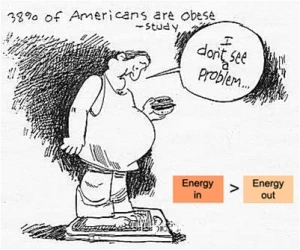
Specifically, we now know that if we master the “energy equation” that stares all of us in the face every day we will reach our weight loss goals (unlike this fine chap standing on the scale). Said another way, if we consistently eat less than what our body uses we will surely lose weight. Remember, BMR tells you how much food (how many calories) your body requires each day. So, how do we easily find out what our BMR is and how do we use this information? (more…)
March 10th, 2011 → 4:06 am @ daped
 Greetings friends!
In our first article of this series we talked about how we can relate our weight loss goals to a journey – like a road trip – and how to be successful we must to know about our bodies. Or in keeping with the example, we need to “learn how to operate our car” before we can hit the gas and look forward to arriving at a skinnier, healthier body.
So, let’s review a few key points from our last conversation and then seek to understand why BMR is so important. (more…)
February 13th, 2011 → 12:26 am @ daped

Greetings friends!
Have you ever taken a really long road trip that took more than one tank of gas? Perhaps to visit your relatives for the holidays or to see something scenic like the Grand Canyon.
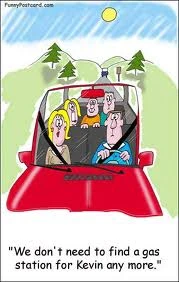
How did you prepare for the trip? You probably researched and planned everything like which route to take, how much gas you needed, where to take pea breaks (unlike our friend Kevin in the cartoon <– ), the outfits you were going to need, etc. Maybe you also threw some fluffy pillows in the car and got your best book of Mad Libs ready so that you could be comfortably entertained. In the end, you likely felt pretty excited to top off your gas tank, empty your bladder, and hop in the like Clark Griswold heading to Wally World. (more…)
February 5th, 2011 → 3:34 pm @ daped
Greetings friends!
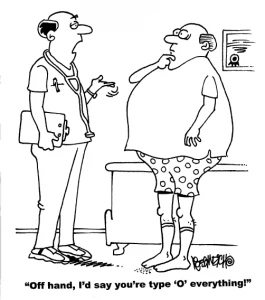
Have you seen this article: Doctors and nurses’ weight biases harm overweight patients ?
THE FACTS
1. 6% of moderately overweight people experience bias due to their size
2. 13% of obese people experience bias
3. 40% of severely obese people experience bias
4. of 600 doctors surveyed, 50% view obese patients as “awkward, unattractive, and non compliant”
5. 11 studies show that many nurses harbor negative opinions of these patients
Is anyone else besides me struck by this? I can understand the frustration with non compliant patients of any kind. Trying to help someone that doesn’t take the advice would be irritating to anyone. But to take it farther and openly describe obese patients (people) as “awkward” and “unattractive” I think says nothing except where we are in society. It’s a sad judgment that I think many overweight folks already know and feel (I know I did) but many don’t deserve … even from doctors.
What do you think?
Until next time,
Doug
December 26th, 2010 → 8:20 am @ daped
 Greetings friends!
Are you up to date on the latest obesity policies suggested by our lawmakers? I definitely wasn’t until I read an article in my local paper. Having had a personal background with childhood obesity, I couldn’t help but be struck by what’s been suggested and form some quick opinions. I’ve outlined the relevant facts for you along with some candid reactions.
Here’s the article. What do you think: Illinois groups try to solve child obesity ?
THE FACTS:
1. Illinois has the 4th highest rate of childhood obesity in the country (1 in 5 kids!)
2. 1 in 4 adults in Illinois is obese
3. 37% of adults in Illinois is overweight
4. Obesity costs! (increases health care costs $3.4 billion per year in Illinois alone)
ILLINOIS ALLIANCE TO PREVENT OBESITY’s PROPOSED SOLUTIONS: (more…)
December 23rd, 2010 → 4:22 pm @ daped

Greetings friends!
I never considered myself to be obese until the Mayo Clinic told me I was. Here’s what they say about it:
“Obesity is defined as having an excessive amount of body fat. Doctors often use a formula based on your height and weight — called the body mass index (BMI) — to determine if you are obese. Adults with a BMI of 30 or higher are considered obese. Extreme obesity, also called severe obesity or morbid obesity, occurs when you have a BMI of 40 or more. With morbid obesity, you are especially likely to have serious health problems. Today, about one in three American adults is considered to be obese, but obesity is also becoming an increasing health problem globally. The good news is that even modest weight loss can improve or prevent the health problems associated with obesity.”
— By Mayo Clinic Staff